Those Who Know The Truth
“We’re practically un-American to be pursuing this,” a Kennedy assassination buff said in 1966. That was then.

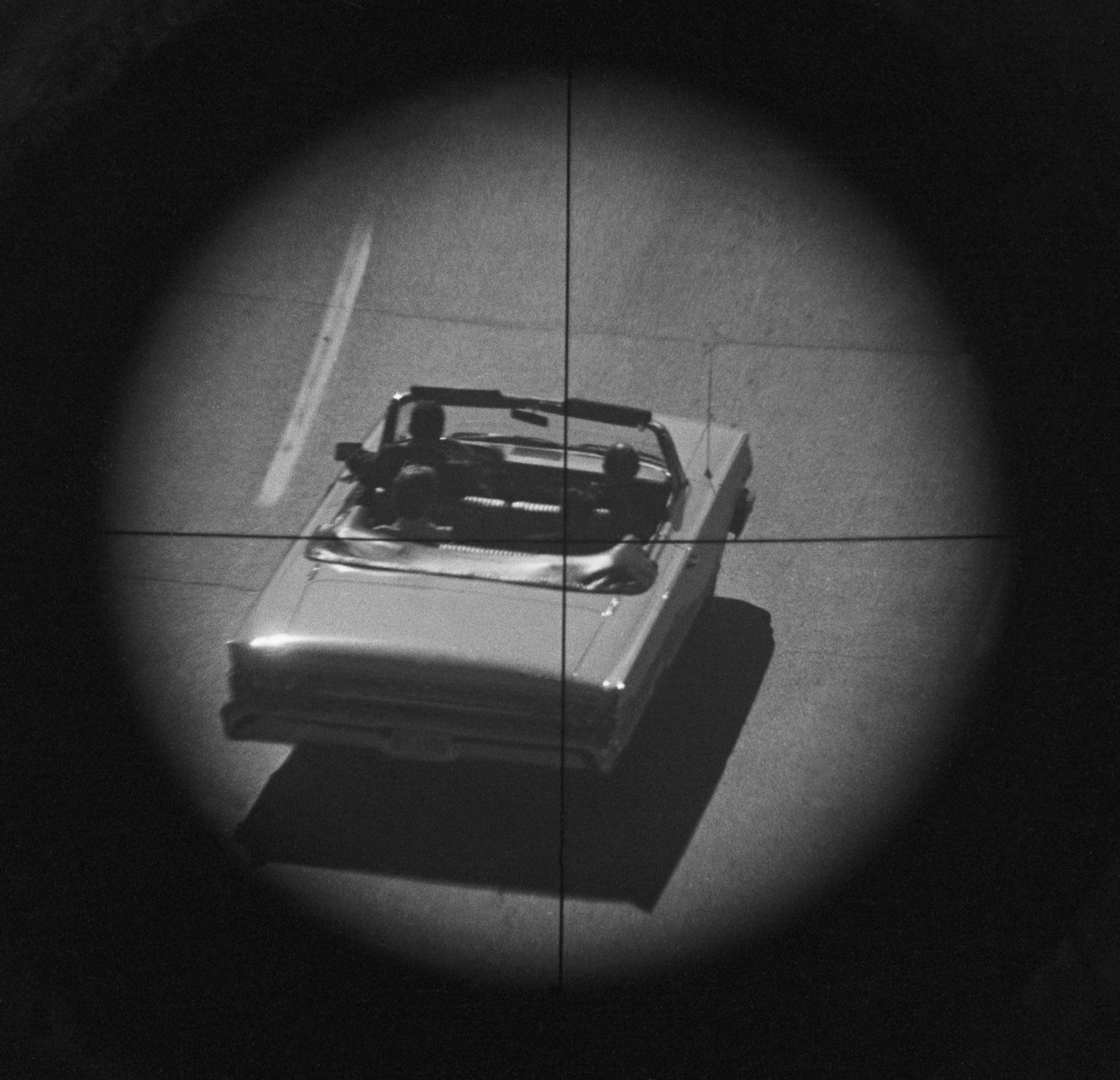
Last month, The New York Times published a 10,000-word investigation into the cause of Jeffrey Epstein’s death, which concluded, after a careful analysis, that he almost certainly killed himself. It should—barring some unforeseeable new development—be the last word on the subject. Yet it probably won’t even move the needle. To understand why, it’s instructive to consider the case of Lee Harvey Oswald, another high-profile detainee who died in police custody.
In a way, the circumstances of their deaths could not have been more different. The surveillance cameras around Epstein’s cell conspicuously failed to record his final hours, while Oswald was shot point-blank on live television. But because the authorities were too inept to keep them alive long enough to face trial, the American public was denied the closure it so desperately needed. And that’s why these national nightmares will never be over.
Which is good news, as far as the book business is concerned! The latest addition to the teetering pile of Kennedy assassination histories is Kaitlin Tiffany’s The Housewives Underground. Tiffany, a staff writer for the Atlantic, chose to focus on the amateur researchers who came to be known as “the buffs.” Like Ron Rosenbaum, I consider myself something of a “buff buff,” so I took an immediate interest in the book and ended up writing a piece about it for a recent issue of Air Mail.
As I note:
The Housewives Underground is not the first book about the buffs. Richard Warren Lewis and Lawrence Schiller’s The Scavengers and Critics of the Warren Report was published in 1967, John Kelin’s Praise from a Future Generation in 2007. But it is the first to approach the subject without an agenda, as those other two titles make clear. Tiffany manages to be sympathetic toward the buffs—she reclaims the pejorative phrase “Housewives Underground” from Lewis and Schiller, bestowing it this time as a term of endearment—without becoming one herself. She keeps her bearings as she follows them down the rabbit hole.
Tiffany is too responsible a journalist to indulge her subjects’ wilder theories, so her case for their significance is ultimately a pretty modest one. My own view is that, as far as the assassination goes, the buffs notched a few wins but ultimately caused much more harm than good. And yet I believe that The Housewives Underground is that rare thing, a contemporary nonfiction book that actually undersells its own relevance.
As I argue:
A historian looks for individuals who changed history, and the buffs, in their way, must now be regarded as world-historical figures every bit as significant as Kennedy, Dulles, and Oswald.
Why? All is revealed in the piece, which I hope you will click through to read. (Non-subscribers can access it for free by entering their email.) I also explore the similarities between the buffs and the subset of One Direction super-fans known as “Larrys,” and make a few notes toward a psychotic loser theory of history.